Cyclosporiasis Outbreak in WV: What you need to know.
- Health Department
- Jul 9
- 2 min read
Due to a significant increase in cyclosporiasis cases, West Virginia has declared a statewide outbreak. Here is what you need to know:
What is cyclosporiasis?
It is an intestinal illness caused by a microscopic parasite.
How is it spread?
People can become infected by consuming food or water contaminated with feces (stool) that contains the parasite. Cyclospora is not spread directly from one person to another.
Where is cyclosporiasis found?
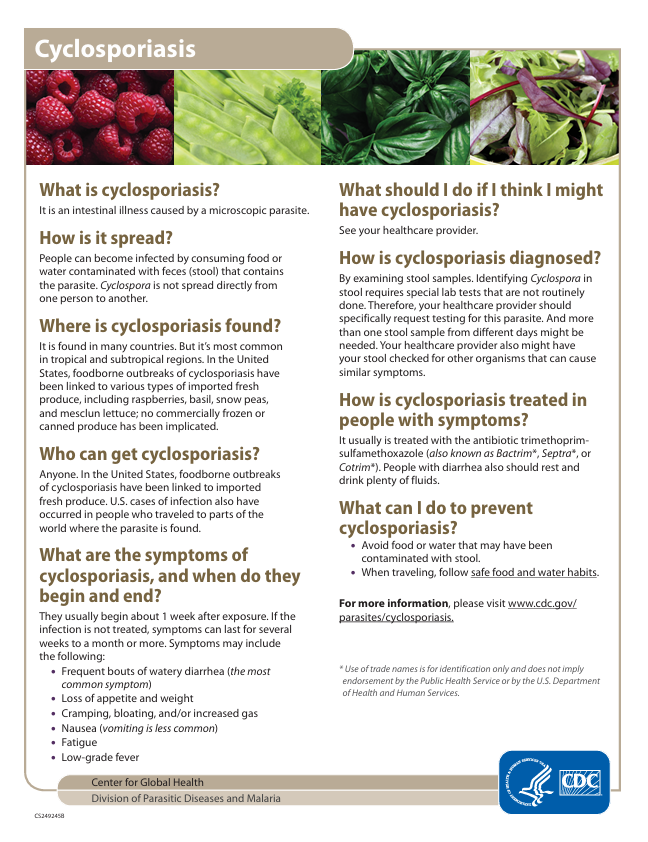
It is found in many countries. But it’s most common in tropical and subtropical regions. In the United States, foodborne outbreaks of cyclosporiasis have been linked to various types of imported fresh produce, including raspberries, basil, snow peas, and mesclun lettuce; no commercially frozen or canned produce has been implicated.
Who can get cyclosporiasis?
Anyone. In the United States, foodborne outbreaks of cyclosporiasis have been linked to imported fresh produce. U.S. cases of infection also have occurred in people who traveled to parts of the world where the parasite is found.
What are the symptoms of cyclosporiasis, and when do they begin and end?
They usually begin about 1 week after exposure. If the infection is not treated, symptoms can last for several weeks to a month or more. Symptoms may include the following:
• Frequent bouts of watery diarrhea (the most common symptom)
• Loss of appetite and weight
• Cramping, bloating, and/or increased gas
• Nausea (vomiting is less common)
• Fatigue
• Low-grade fever
What should I do if I think I might have cyclosporiasis?
See your healthcare provider.
What can I do to prevent cyclosporiasis?
• Avoid food or water that may have been contaminated with stool.
• When traveling, follow safe food and water habits.
For more information, please visit: