09/29/26 Public Health Education Topic: Diphtheria
Per CDC
Key points
Diphtheria is a serious disease caused by a toxin produced by some strains of bacteria called Corynebacterium diphtheriae.
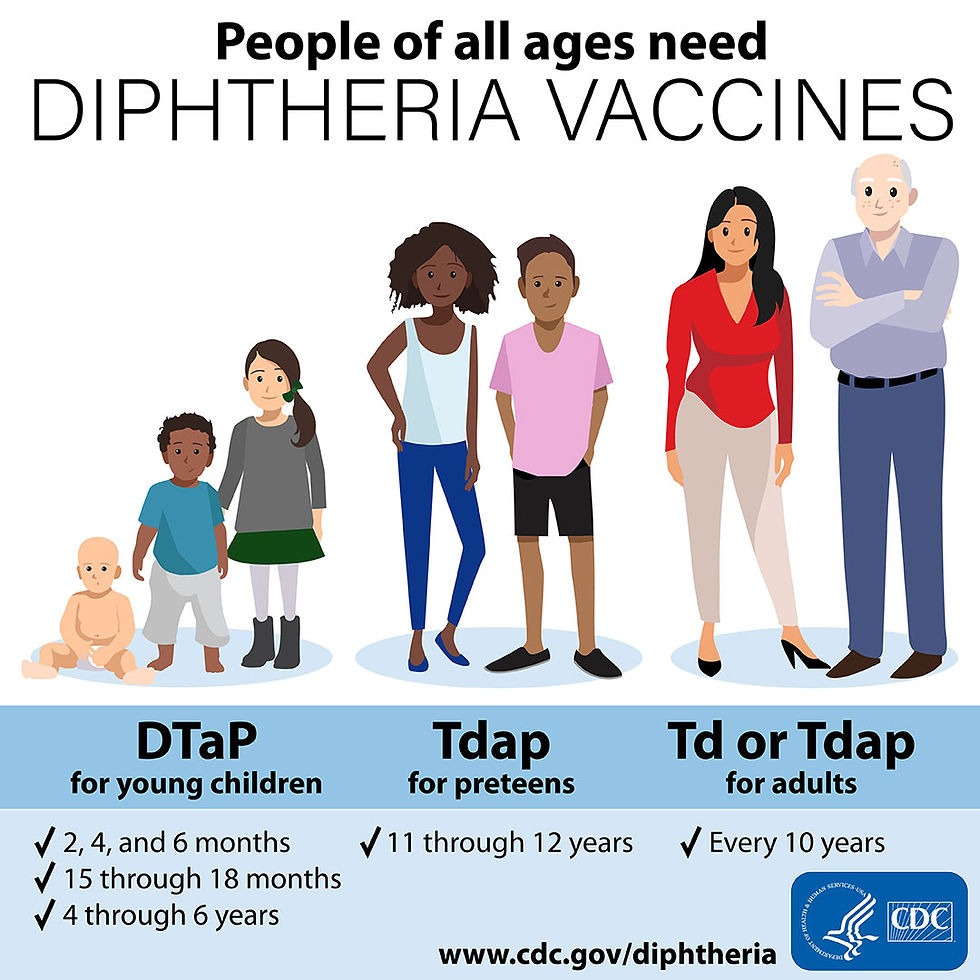
Keeping up to date with recommended vaccines is the best protection against diphtheria.
Talk to a vaccine provider if you have questions about diphtheria vaccines.
Risk factors
Close contact
Close contact with someone with diphtheria increases the risk of getting infected. Close contact with someone with diphtheria includes
Living with them
Being close together often
Sharing respiratory secretions (saliva, spit)
Being exposed to wound secretions (open sores or ulcers)
International travel
Nearly all diphtheria cases in the United States are associated with international travel to an affected area.
Vaccination status
People who aren't up to date with their diphtheria vaccines are at increased risk of severe disease with respiratory diphtheria.
How it spreads
People most commonly spread C. diphtheriae by coughing or sneezing, which creates small respiratory droplets that contain the bacteria. Other people can get infected if they breathe in those droplets.
People can also get infected from touching open sores or ulcers caused by C. diphtheriae.
To learn more please visit: About Diphtheria | Diphtheria | CDC