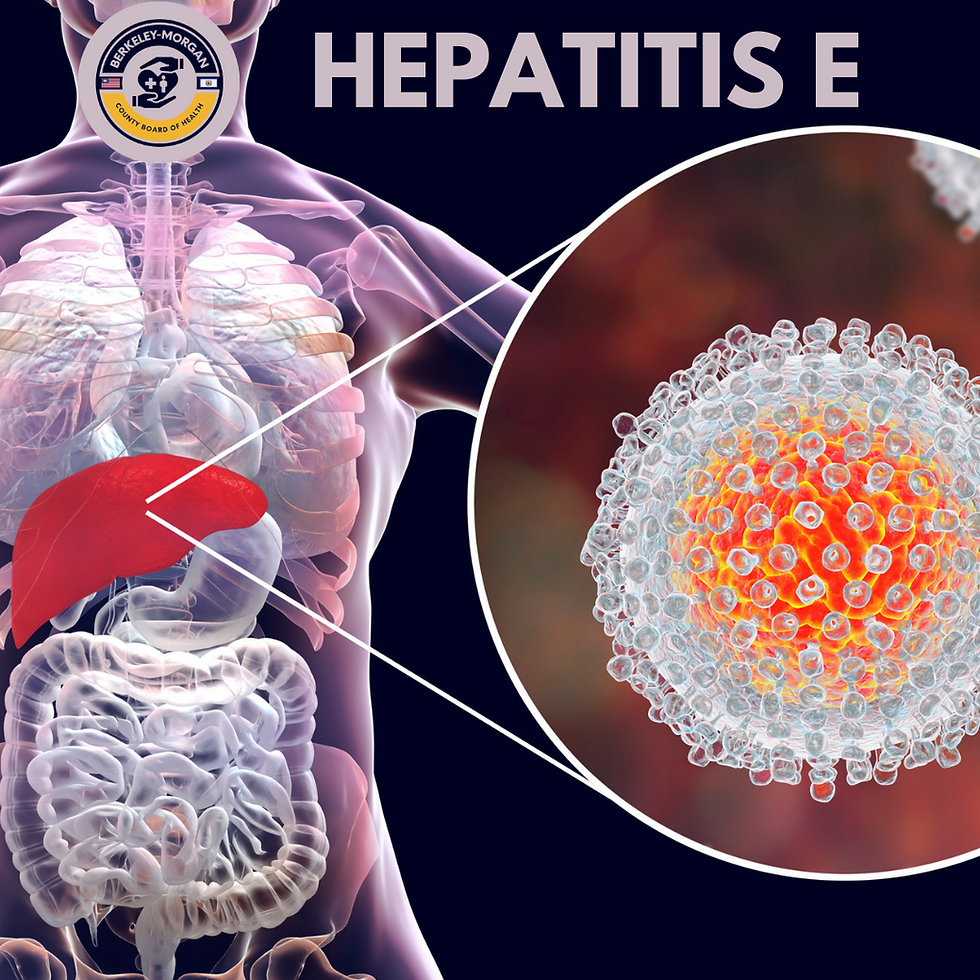
07/18/25 Public Health Education Topic: Hepatitis E
Per CDC
Key points
Hepatitis E is a liver disease caused by the hepatitis E virus (HEV).
Hepatitis E is common in many parts of the world where sanitation is poor.
Most people recover fully from hepatitis E without any complications.
Hepatitis E can only be diagnosed with laboratory tests.
Signs and symptoms
Many people with hepatitis E, especially young children, do not have any symptoms. Others may experience one or more of these symptoms:
Dark urine or clay-colored stools
Feeling tired
Fever
Joint pain
Loss of appetite
Nausea, stomach pain, throwing up
Yellow skin or eyes (jaundice)
If symptoms occur, they usually appear anywhere from 2 to 6 weeks after exposure to HEV.
At-risk populations
Travelers to areas of the world with poor sanitation are at greatest risk for getting hepatitis E. Certain populations are at risk for more severe outcomes due to hepatitis E, such as long-term liver problems and liver failure, including:
Pregnant women.
People who have had solid organ transplants.
People with compromised immune systems.
Prevention
No vaccine is available in the US to protect against hepatitis E. However, you can lower your risk for HEV infection by drinking only purified water when visiting countries where hepatitis E is common and by avoiding raw or undercooked pork, venison, and wild boar meat.
To learn more visit: Hepatitis E Basics | Hepatitis E | CDC